
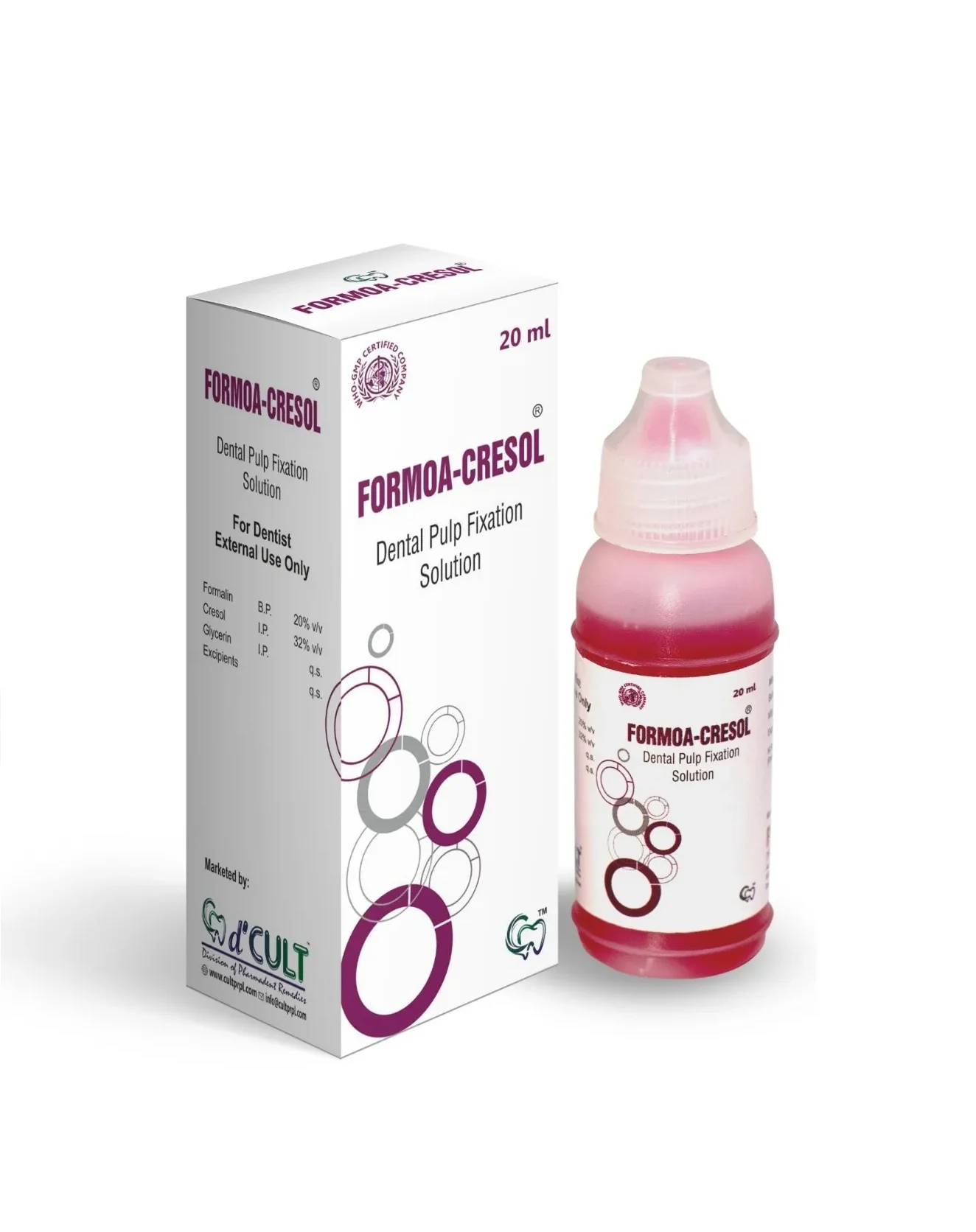
Pharmadent Forma-Cresol (20ml) Dental Pulp Fixation Solution
- Availability: In Stock
- Brand: Pharmadent
- Category: PULP TESTERS, Pulp Devitalizer,
Availability: In Stock
Formocresol is a chemical solution used in dentistry, primarily for treating the pulp cavity during endodontic procedures. It has a long history of use, particularly in pediatric dentistry for vital pulpotomies in primary teeth. Composition: Formocresol is typically a mixture containing formaldehyde, cresol, and glycerin in a water base. Buckley's formocresol...
₹155
Product Notification Form
Enter your detail and we will notify you when the product is back in stock.
Formocresol is a chemical solution used in dentistry, primarily for treating the pulp cavity during endodontic procedures. It has a long history of use, particularly in pediatric dentistry for vital pulpotomies in primary teeth.
Composition:
- Formocresol is typically a mixture containing formaldehyde, cresol, and glycerin in a water base.
- Buckley's formocresol contains 19% formaldehyde, 35% tricresol, 15% glycerin, and 31% water.
- Glycerin is added to prevent the formaldehyde from forming paraformaldehyde, which can cause clouding of the solution.
Features:
- Bactericidal and a mummifying agent
- An additional devitalizing medicine for the secondary treatment, on teeth and root canals.
- Extremely effective pulp devitalized
- Has pain-relief effect
- Powerful disinfectant
- Root canal dressing
- Primary teeth pulp preparation
Uses:
- Vital pulpotomy in primary teeth: This is one of the most common uses of formocresol, where it is applied to the remaining pulp tissue after removal of the infected portion.
- Pulp fixation and mummification: It has been used to fix and mummify pulp tissue and necrotic material within root canals.
- Temporary intracanal medicament: Formocresol can be used temporarily during root canal therapy to disinfect the canal and reduce microbial load.
Note:
- Formocresol should be handled with care and isolated from soft tissues due to its caustic nature.
- Individuals with known sensitivities to formaldehyde or cresol should avoid using formocresol.
- The recommended application time for formocresol has been shortened over time due to concerns about toxicity.
Packing:
- Bottle of 20ml
